
A Complete Guide to Choosing the Right Interior Designer for Your Home
Designing your home is a significant investment—emotionally, financially, and functionally. The right interior designer can transform your vision into a beautiful, practical living space, while the wrong choice can lead to delays, cost overruns, and dissatisfaction. This complete guide to choosing the right interior designer for your home will help you make an informed, confident decision.
Understand Your Needs and Expectations
Before approaching an interior designer, be clear about what you want.
- Are you designing a new home or renovating an existing one?
- Do you need full-service interior design or consultation only?
- What is your preferred style—modern, minimalist, traditional, or luxury?
- What is your approximate budget and timeline?
Clarity at this stage helps you shortlist designers who align with your requirements.
Research and Shortlist Interior Designers
Start by researching interior designers who specialize in residential projects similar to yours.
- Explore websites, portfolios, and social media profiles
- Look for consistency in design quality and execution
- Check experience with homes of similar size and scope
Shortlisting 3–5 designers allows for meaningful comparison.
Review Portfolios Carefully
A designer’s portfolio reveals their design sensibility and technical expertise.
While reviewing portfolios, focus on:
- Space planning and layout efficiency
- Color combinations and material usage
- Attention to detail and finishing quality
- Variety in projects, not just one design style
Choose a designer whose work resonates with your taste, not just trends.
Check Credentials and Experience
Professional credentials and experience matter, especially for complex residential projects.
- Years of experience in home interiors
- Educational background or professional training
- Experience coordinating with contractors and vendors
An experienced interior designer can anticipate challenges and manage them efficiently.
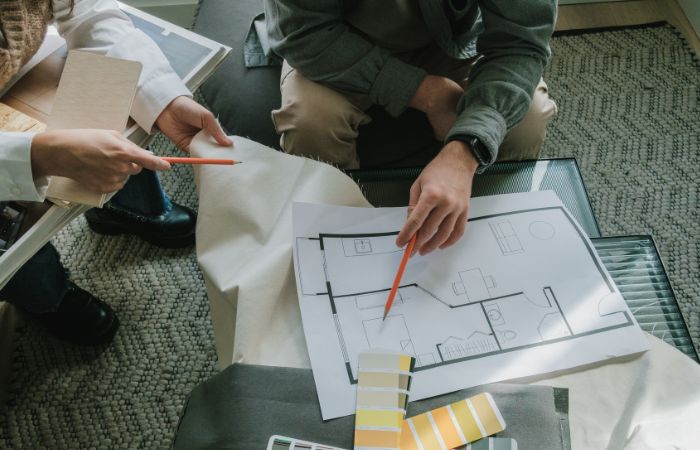
Understand the Design Process
Every designer has a unique workflow. Ask them to explain their process clearly.
Key aspects to understand:
- Concept development and design presentations
- Space planning and 3D visualizations
- Material selection and approvals
- Site supervision and execution support
Discuss Budget Transparency
Budget clarity is critical to avoid misunderstandings later.
- Ask for a detailed cost estimate or range
- Understand what is included and excluded
- Clarify design fees, execution costs, and payment milestones
A good interior designer respects your budget and suggests value-driven solutions.
Evaluate Communication and Compatibility
You’ll be working closely with your interior designer, so compatibility is essential.
- Do they listen carefully to your ideas?
- Are they open to feedback and revisions?
- Do they explain concepts clearly and patiently?
Strong communication ensures your vision is accurately translated into design.
Ask About Customization and Flexibility
Your home should reflect your lifestyle, not a template.
Ensure the designer offers:
- Customized layouts and furniture solutions
- Flexibility to adapt designs during execution
- Personalized material and finish selections
Customization is what turns a house into a home.
Check Reviews and Client Feedback
Client reviews provide real insight into a designer’s professionalism and reliability.
- Look for feedback on timelines and budget control
- Note comments about after-service support
- Ask for references if possible
Consistent positive feedback is a strong indicator of quality service.
Understand Timelines and Project Management
Delays can be costly and stressful. Discuss timelines in advance.
- Estimated project duration
- Coordination with contractors and vendors
- Handling of delays or unforeseen issues
A well-organized designer ensures smoother execution and timely delivery.
Trust Professional Judgment—But Stay Involved
A good interior designer brings expertise and creative vision, but your involvement is equally important.
- Trust their technical and aesthetic guidance
- Stay engaged during key design decisions
- Maintain open communication throughout the project
Small spaces are an opportunity, not a limitation. With smart design, multifunctional furniture, and clever use of light and storage, even the coziest areas can feel spacious and stylish. Maximize every inch and let creativity transform your compact living into a masterpiece!